Stop wasting your time on coffee dates that never lead to wedding bookings
Turning coffee dates into referrals requires moving beyond the polite small talk that plagues the wedding industry. To get results, you must approach networking as a strategic partnership rather than a social outing. This means vetting who you sit down with, identifying exactly how your services overlap, and being explicit about how you can help each other. It is not about asking for work; it is about building a system where recommending each other to couples becomes the instinctive, low-friction path for both of you.
I have seen too many wedding business owners spend their entire off-season in local cafes, drinking overpriced lattes with people who will never send them a single lead. They call it networking, but it is actually just procrastination disguised as productivity. If you are a high-end wedding planner, you do not need to be building deep ties with a budget-friendly balloon artist. The aesthetics might be nice, but the client profiles do not match. You are not just looking for nice people; you are looking for businesses that share your ideal couple's disposable income level and design sensibilities.
Before you even agree to a meeting, check their portfolio and their pricing. If they do not list prices, look at their venues. If they are shooting weddings at the local pub and you are targeting five-star manor houses, a coffee date is a waste of both your time. You need to be in the same orbit. When you do sit down, skip the ten-minute monologue about how busy you are. Instead, ask them about their client pain points. If a florist tells me their couples always struggle with the timeline, and I am a coordinator, that is my opening. I am not selling to the florist; I am showing the florist how I can make their job easier by managing the couple.
The specific mechanics of the referral exchange
The most common mistake I see is leaving the meeting with a vague promise to keep each other in mind. In my experience, that is the death knell of a potential referral partnership. You need to be specific about what a good lead looks like for you. Do not just say you want more weddings. Say you are looking for couples who have booked a dry-hire venue and are overwhelmed by the logistics. Give the other supplier the exact language they can use when they talk about you. By removing the mental load of how to pitch you, you make it ten times more likely that they actually will.
We also need to talk about the reality of the reciprocal referral. You do not always have to trade like-for-like. A venue coordinator might send a photographer twenty leads a year, while that photographer might only be able to send the venue two. That is okay, provided the value is understood. Perhaps the photographer provides the venue with high-quality social media content in exchange for those leads. Always look for the value gap and fill it. If you are the one receiving more, find a way to be indispensable to the other person beyond just hoping a lead falls into your lap to send back.
Moving from socialising to systemising
Once you have had the coffee and established a rapport, the real work happens in the follow-up. Do not just send a thank you email. Send a resource they can actually use. If you mentioned a specific contract clause or a new marquee company during your chat, send them the link. This proves you were listening and that you are professional. A referral partner needs to trust that you will not embarrass them. When a supplier recommends you, they are putting their own reputation on the line. If you are late to the coffee date, disorganized with your follow-up, or flaky in your communication, they will never risk telling a couple to hire you.
I recommend creating a dedicated page or a hidden PDF for your referral partners. It should include your best images, a short bio they can copy and paste, and a direct link to your enquiry form. The goal is to make referring you a one-click process. If they have to search through their inbox to find your website or spend time explaining what you do, the friction will stop them from doing it. I have used this approach in my own businesses to ensure that when a colleague mentions my name, the couple receives a polished, professional introduction immediately. It takes the guesswork out of the equation for everyone involved.
Maintaining the momentum throughout the season
Networking is not a seasonal activity to be relegated to January and February. The best partnerships are nurtured when things are busy. Send a quick text to your referral partners when you see they have won an award or had a beautiful gallery published. Better yet, when you work a wedding together, be the easiest person on the team to deal with. The way you behave on the wedding day is the ultimate networking tool. If you are a photographer who shares your gallery with the florist and the venue promptly, you are doing more for your referral pipeline than a hundred coffee dates could ever achieve.
If you find that you are consistently giving out referrals but never receiving them, it is time for an honest audit. Is it your pricing? Is it your brand aesthetic? Or are you simply asking the wrong people? It is okay to let certain networking relationships fade if they are not mutually beneficial. Your time is your most valuable asset, and you should treat it with the same respect you treat your bottom line. Focus on the three to five key partners who truly understand your value and double down on those relationships instead of trying to be friends with every supplier in the county.
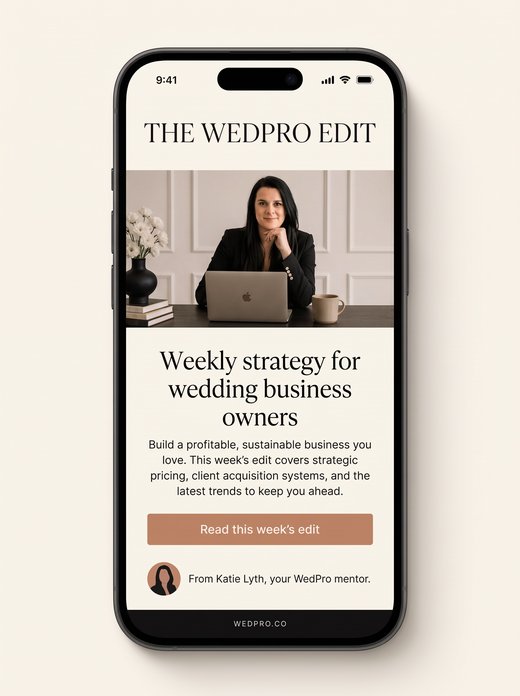
Building a wedding business that survives long-term requires a mix of hard data and genuine human connection. If you want more of the honest, no-fluff strategy that actually moves the needle on your bookings, you should Subscribe to The WedPro Edit. It is my weekly newsletter where I share pricing insights, sales strategies, and the behind-the-scenes lessons I have learned from coaching hundreds of wedding suppliers to profitability.